AAC for Parkinson's and MS

Parkinson's and MS often change speech gradually: it gets quieter, hoarser or slurred, or tiring by the evening. Many people use an app only for particular conversations, such as phone calls.

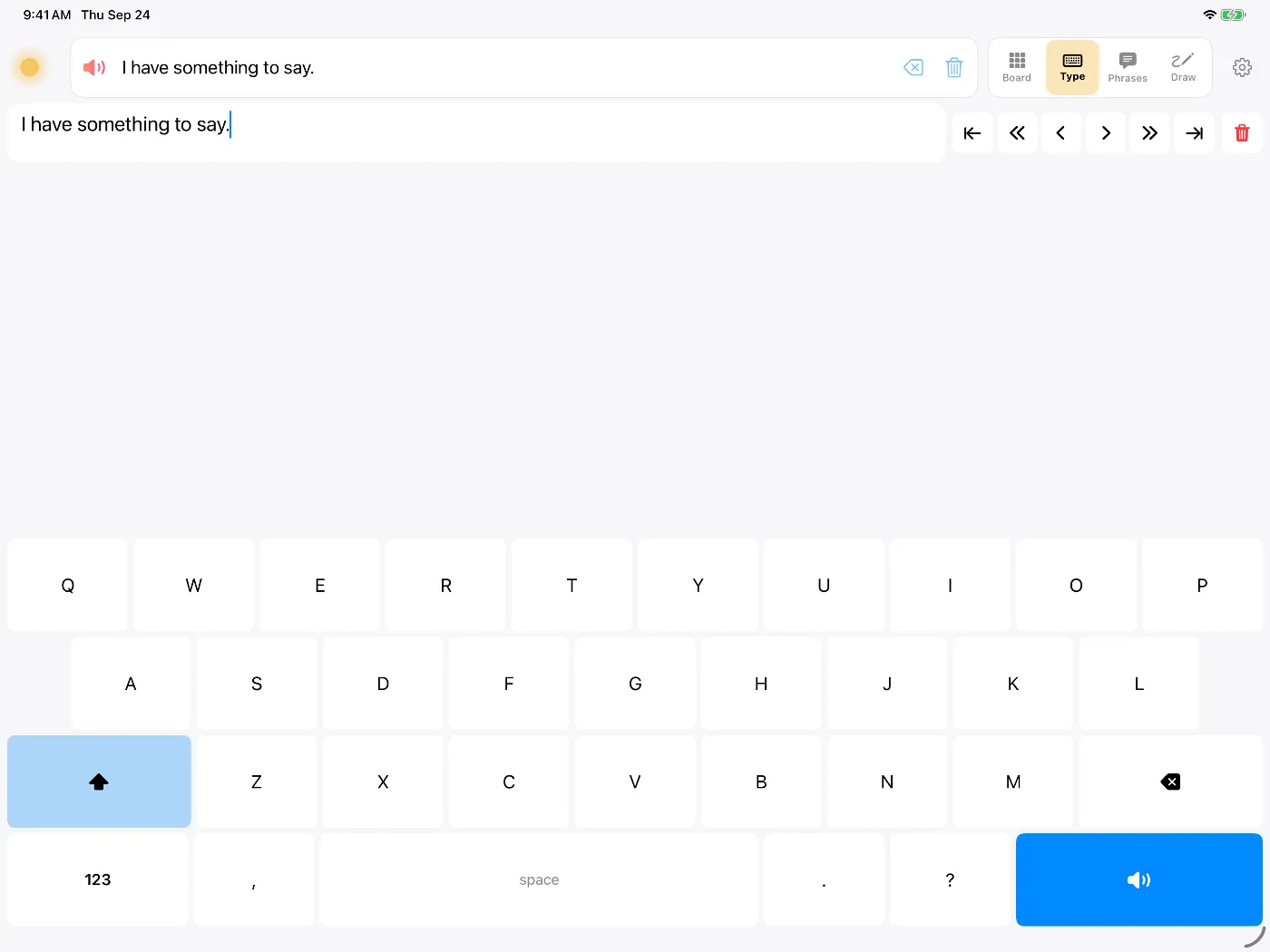
Dawn's Type view on iPad with the message 'I have something to say.' above a large keyboard

Speech changes are very common in Parkinson's. Reviews put the share of people affected as high as 89 percent,1 and the voice itself, going soft or hoarse, usually changes first.2 In multiple sclerosis (MS), about 45 percent of people have dysarthria, the medical word for slurred or unclear speech caused by muscle weakness or poor coordination.3 Many more find talking tiring, or harder later in the day.4

AAC means any way of communicating that adds to speech. Most people with Parkinson's or MS keep talking and use it for particular conversations, like a phone call where the other person keeps saying "pardon?".

Examples

Phone calls and noise. Type what you want to say and let Dawn say it, or show the message full screen to the person at the counter.

Things you say often. "My voice is quiet, please come closer." "I have Parkinson's, I'm not drunk." "Can you text me instead?" Save them in the Phrases tab.

Later in the day. If speaking gets tiring, you can type or use saved phrases.

Recording your voice. About eight seconds of reading while speech is clear lets Dawn build a voice from it. You can record a few phrases too.
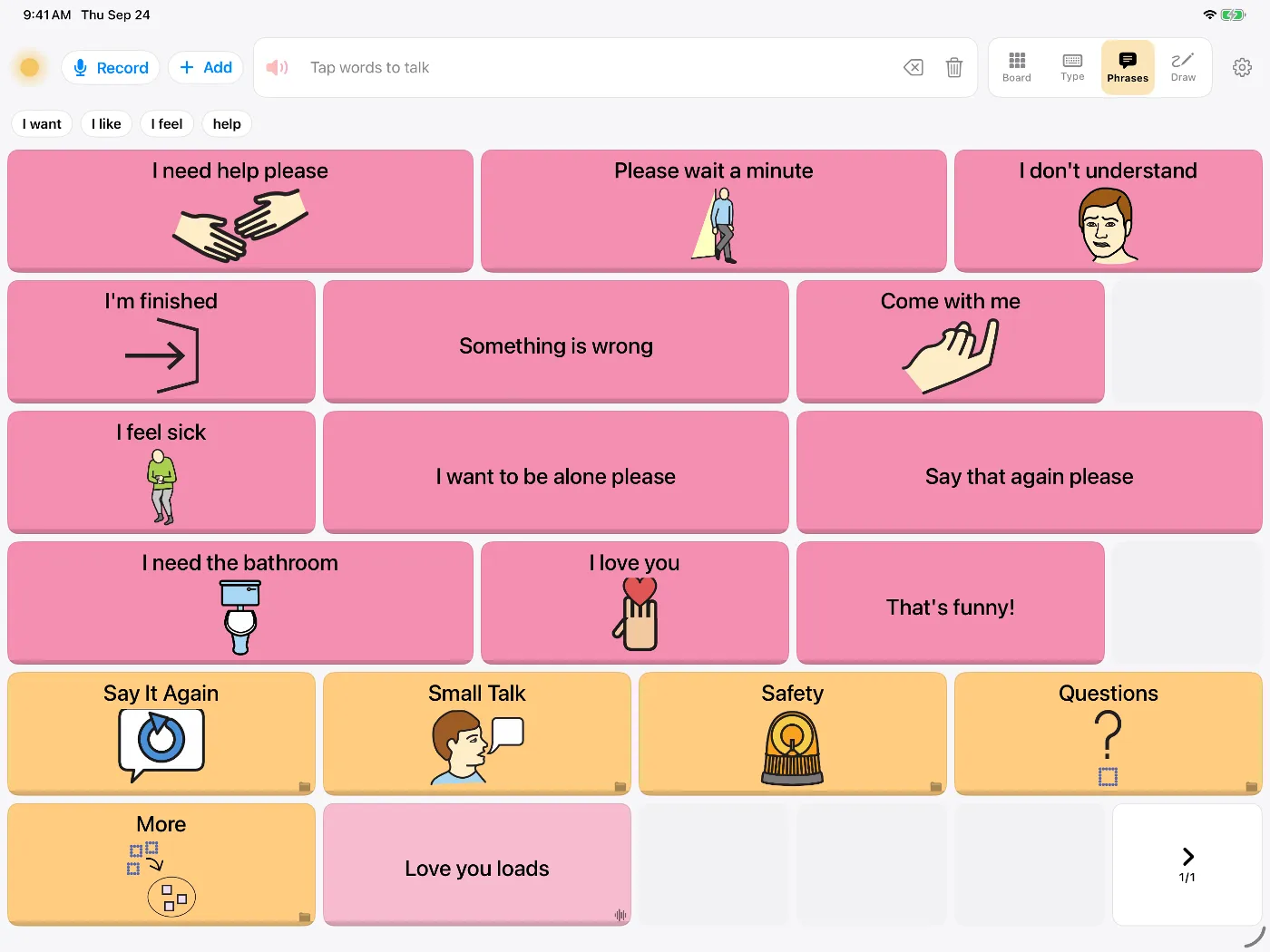
Dawn's Phrases tab with buttons such as 'Please wait a minute', 'Say that again please' and 'I need help please'
The Phrases tab.

Tremor and tired hands

Small buttons can be hard with a tremor. You can make buttons bigger, set a hold time so brief touches don't select a button, and have Dawn ignore accidental repeat taps. The keyboard suggests words, which saves keystrokes. If touch becomes too hard, Dawn's switch scanning and Apple's eye tracking and Switch Control work with every button.
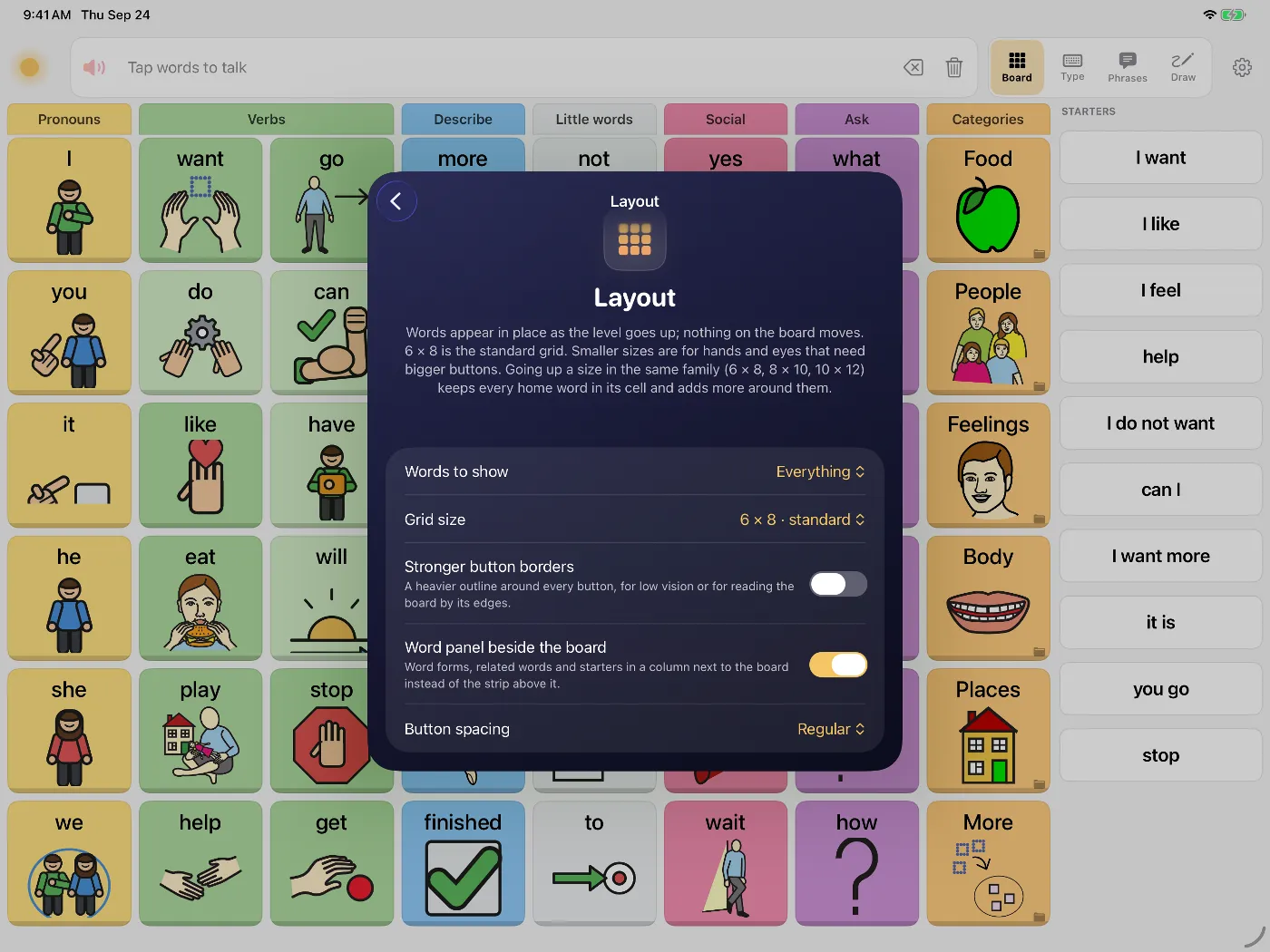
Dawn's Layout settings on iPad with options for grid size, stronger button borders and button spacing
Layout settings: grid size, stronger borders and button spacing.

Research

There is much less AAC research in Parkinson's and MS than in stroke or ALS. Reviews recommend considering AAC for severe speech problems,5 and a 1985 survey of people with MS found that some who couldn't be understood by strangers were already using communication aids.6

A speech and language therapist can assess your speech and suggest what to try first; ask your neurologist, MS nurse or GP for a referral. Dawn is a way to communicate alongside the treatment your care team recommends.

Questions people ask

Should I try speech therapy first?

Usually, yes. Speech therapy for Parkinson's, including programs that train you to speak louder such as LSVT LOUD, is well established.5 Ask your neurologist or GP for a referral. An app is used alongside therapy.

Is there evidence AAC helps in Parkinson's or MS?

Less than for other conditions. Reviews suggest considering AAC when speech is severely affected,5 and case reports describe people using speaking devices successfully,7 but there are no large trials. Many people use a typing app only in particular situations.

My hands shake. Can I still type?

You can make buttons bigger, set a hold time so a brief brush doesn't count as a tap, and have Dawn ignore quick repeated taps. Saved phrases mean less typing. If touch gets too hard, switches and eye tracking also work with Dawn.

Should I record my voice now?

If you want a voice made from your recording, record a sample while your speech is clear. Dawn needs about eight seconds of reading.

Sources

  1. Dashtipour K, Tafreshi A, Lee J, Crawley B. Speech disorders in Parkinson's disease: pathophysiology, medical management and surgical approaches. Neurodegenerative Disease Management, 2018. doi.org/10.2217/nmt-2018-0021
  2. Ho AK, et al. Speech impairment in a large sample of patients with Parkinson's disease. Behavioural Neurology, 1998. pubmed.ncbi.nlm.nih.gov/11568413
  3. Smyrni V, et al. Prevalence of dysarthria in the multiple sclerosis population: a systematic review and meta-analysis. Multiple Sclerosis and Related Disorders, 2025. doi.org/10.1016/j.msard.2025.106458
  4. Johansson K, Schalling E, Hartelius L. Self-reported changes in cognition, communication and swallowing in multiple sclerosis. Folia Phoniatrica et Logopaedica, 2021. doi.org/10.1159/000505063
  5. Atalar MS, Oguz O, Genc G. Hypokinetic dysarthria in Parkinson's disease: a narrative review. Sisli Etfal Hastanesi Tip Bulteni, 2023. doi.org/10.14744/SEMB.2023.29560
  6. Beukelman DR, Kraft GH, Freal J. Expressive communication disorders in persons with multiple sclerosis: a survey. Archives of Physical Medicine and Rehabilitation, 1985. pubmed.ncbi.nlm.nih.gov/4051708
  7. Ferriero G, Caligari M, Ronconi G, Franchignoni F. When are high-tech communicators effective in Parkinson's disease? International Journal of Rehabilitation Research, 2012. doi.org/10.1097/MRR.0b013e32834f8c96

Try Dawn on iPhone or iPad

Symbols, typing and saved phrases, spoken in a natural voice. Dawn can also build a voice from about eight seconds of your own speech.

Requires iOS 17 or later.