What is modeling?
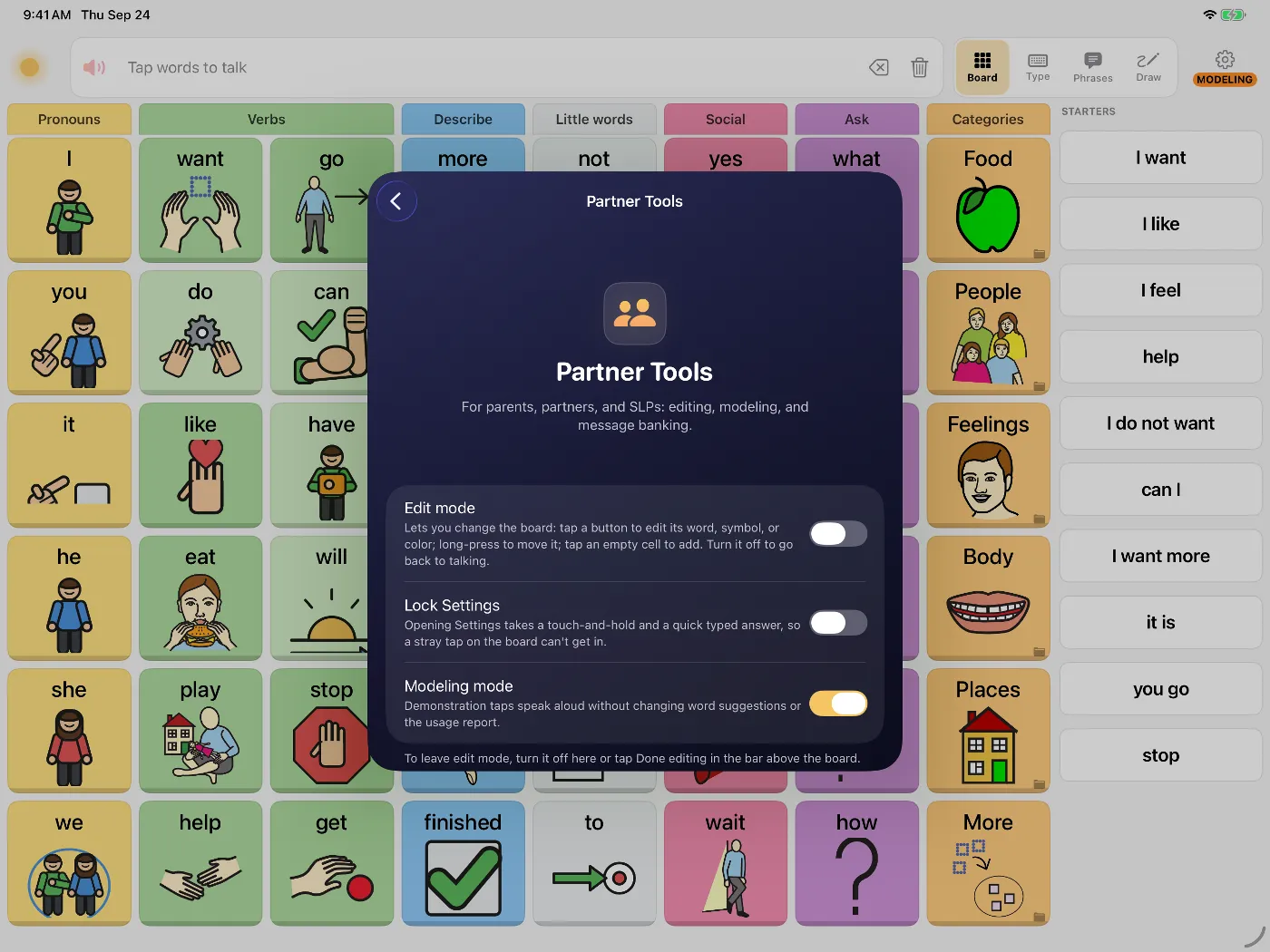
Modeling (also called aided language input or aided language stimulation) means using the AAC system yourself while you talk. You say a sentence out loud and tap the key words on the device as you say them. Your child sees where the words are and hears them used in real situations.
What the research found
A 2018 analysis of 28 studies (26 small single-case studies and 2 group studies) found that interventions including adults using the AAC system were "highly effective" for people of various ages, disabilities and language skills, helping both understanding and expression.1 The authors recommended that people use AAC themselves when talking with someone who uses it.
A 2016 review found modeling led to children taking more turns in conversation, learning more words, combining symbols and using more grammar.2 A 2018 review of 48 studies with children up to age 21 found modeling generally helped children express themselves more.3 And in a randomized trial with toddlers, parents were coached to use a speech-generating device as they talked with their child; those children learned many more words than children taught with speech alone.4
How to model, step by step
- Get close. Sit beside your child with the device where you can both see it.
- Talk normally. Say your whole sentence out loud.
- Tap one or two key words as you say them. "You want more bubbles?" "Uh oh, it fell."
- Model two words when your child uses one. If they tap "more", you might model "more bubbles".
- Pause to give your child time to respond.
- Respond if they tap a word, look at you, make a sound or speak.
Examples from everyday life
- Snack time"Do you want crackers?" "More juice?" "All finished?"
- Bath time"The water is hot." "Let's wash your hair." "Not in your eyes!"
- Playing"Go, car, go!" "Stop!" "Your turn." "That's funny."
- Getting dressed"Shoes on." "Where is your other sock?" "Help me."
- Feelings"You look sad." "I feel tired too." "Are you angry?"
Model more than requests
"Want" and "more" come up all day, so they get modeled most. AAC research with autistic children has also mostly looked at asking for things; there is less evidence for commenting, protesting and chatting.5 Try modeling "look", "I like", "don't like", "silly", "where", "why" and "uh oh" too.
Common mistakes
- Quizzing. "Show me dog." "What color is this?" Comment on what's happening instead.
- Demanding a tap. "Say more and you can have it." Don't require a particular button press before giving your child what they're asking for.
- Modeling only when things go well. Model during frustration too: "You're mad. You want to stop."
- Stopping when there's little response. You may need to model for weeks before you notice your child responding.