Some children are slow to start talking and catch up on their own. Others have a speech or language delay that lasts longer, sometimes as part of autism, Down syndrome or another condition, and sometimes with no clear reason.
AAC (augmentative and alternative communication) means any way of communicating besides speech: gestures, signs, pictures, or an app that speaks. For example, a toddler might tap "more" at snack time.
What the research says about starting early
- Toddlers don't need to be "ready"ASHA states there are no prerequisites for AAC: a child doesn't have to show particular skills before starting.1 An analysis of 114 studies reported similar benefits across the ages, diagnoses and starting skills it looked at.2
- AAC didn't reduce speechIn the toddler trial, children in the device groups ended up with larger vocabularies, including spoken words.3 See the research page for details.
- Speech gains are usually smallWhen speech improves alongside AAC, the gains are usually modest.4
- Adults using the device helpsChildren learn AAC by watching adults use it. Research supports pointing to words on the child's device as you talk.5
Screen time
An AAC app is used differently from videos or games. You use it together, at snack time for example, and your child taps a word to ask for more.
Dawn has no videos, games, rewards or ads, and nothing plays by itself. With Settings locked, a toddler can press buttons on the board but can't change it.
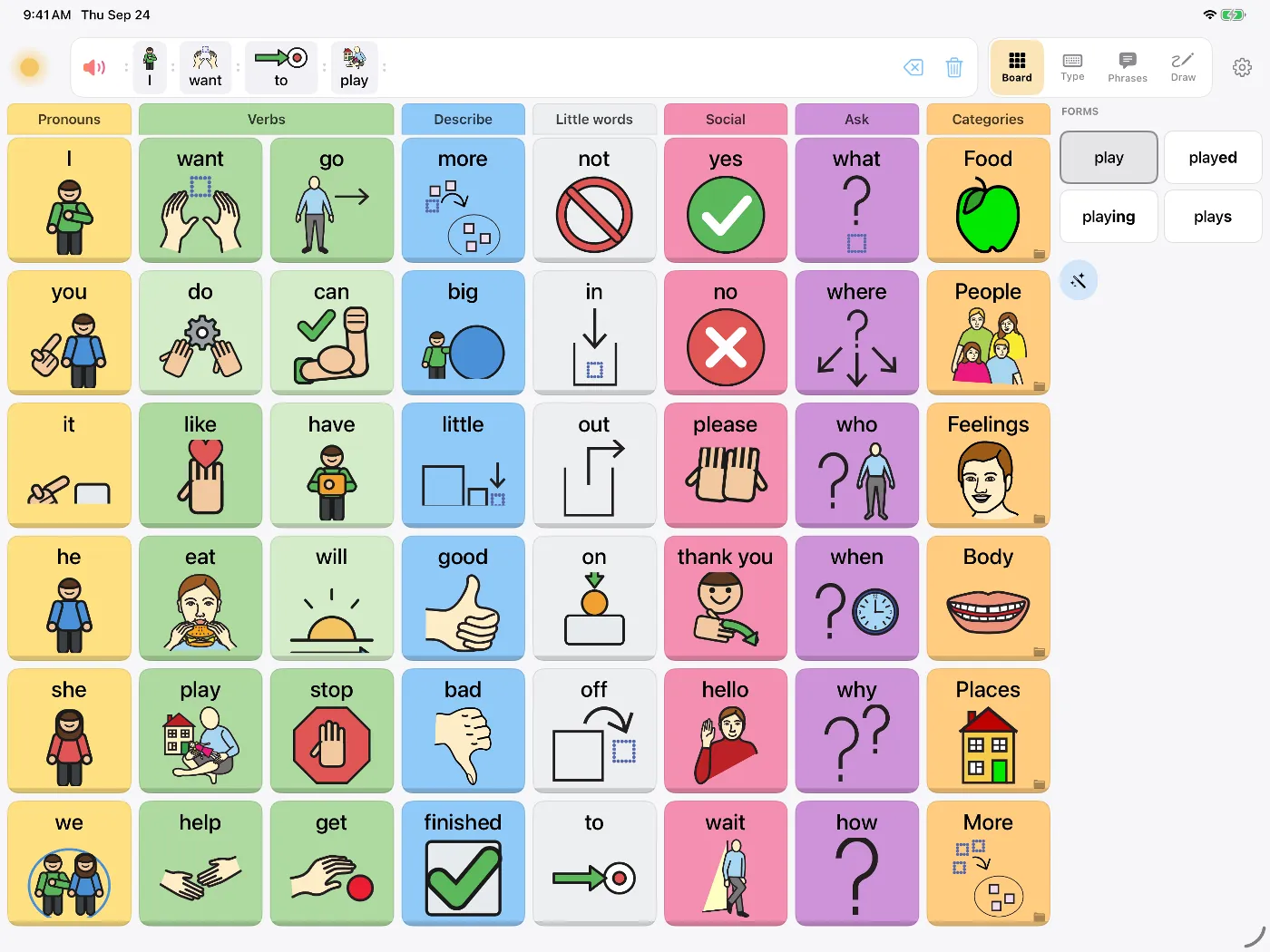
Setting up Dawn for a toddler
- Begin with a few words. Set "Words to show" to First words, about a dozen high-use words like more, stop, go and help. As your child is ready, move to Combining, then Everything. New words appear in their final places, and words already on the board stay where they were.
- Bigger buttons if they need them. Grid sizes of 3 × 4 and 4 × 6 give larger targets for small or unsteady hands.
- A child's voice. Dawn includes children's voices.
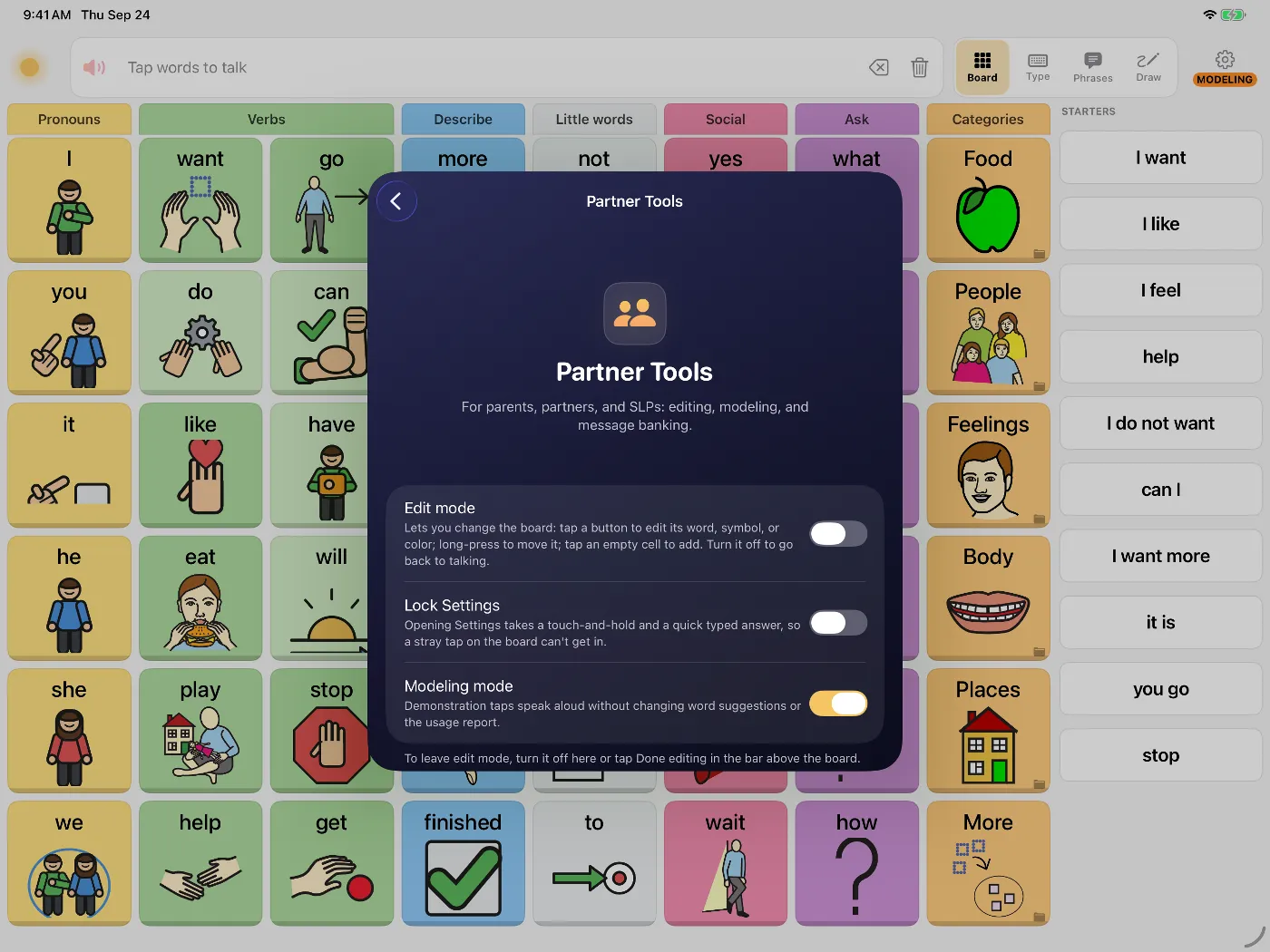
- Modeling mode. Turn on modeling mode in Partner Tools when you're the one tapping, so your demonstrations don't change your child's word suggestions or usage history.
- Photos. Add photos of family, pets and favourite things as buttons.
A first week at home
- Pick one or two daily routines your child enjoys, such as blowing bubbles.
- During those routines, tap a word yourself as you say it: "more bubbles?", "all done". Don't ask your child to copy you.
- When your child taps anything, respond as if they meant it.
- Keep the device nearby and charged, all day, not just at "practice time".
Our guide on how to start AAC with your child has more ideas, and modeling AAC explains how to use the board yourself without quizzing your child.
Dawn can't assess a speech delay. If you're worried about your child's speech, ask your doctor or health visitor about a referral to a speech-language pathologist (speech and language therapist in the UK). They can assess your child and help you use AAC alongside other support.