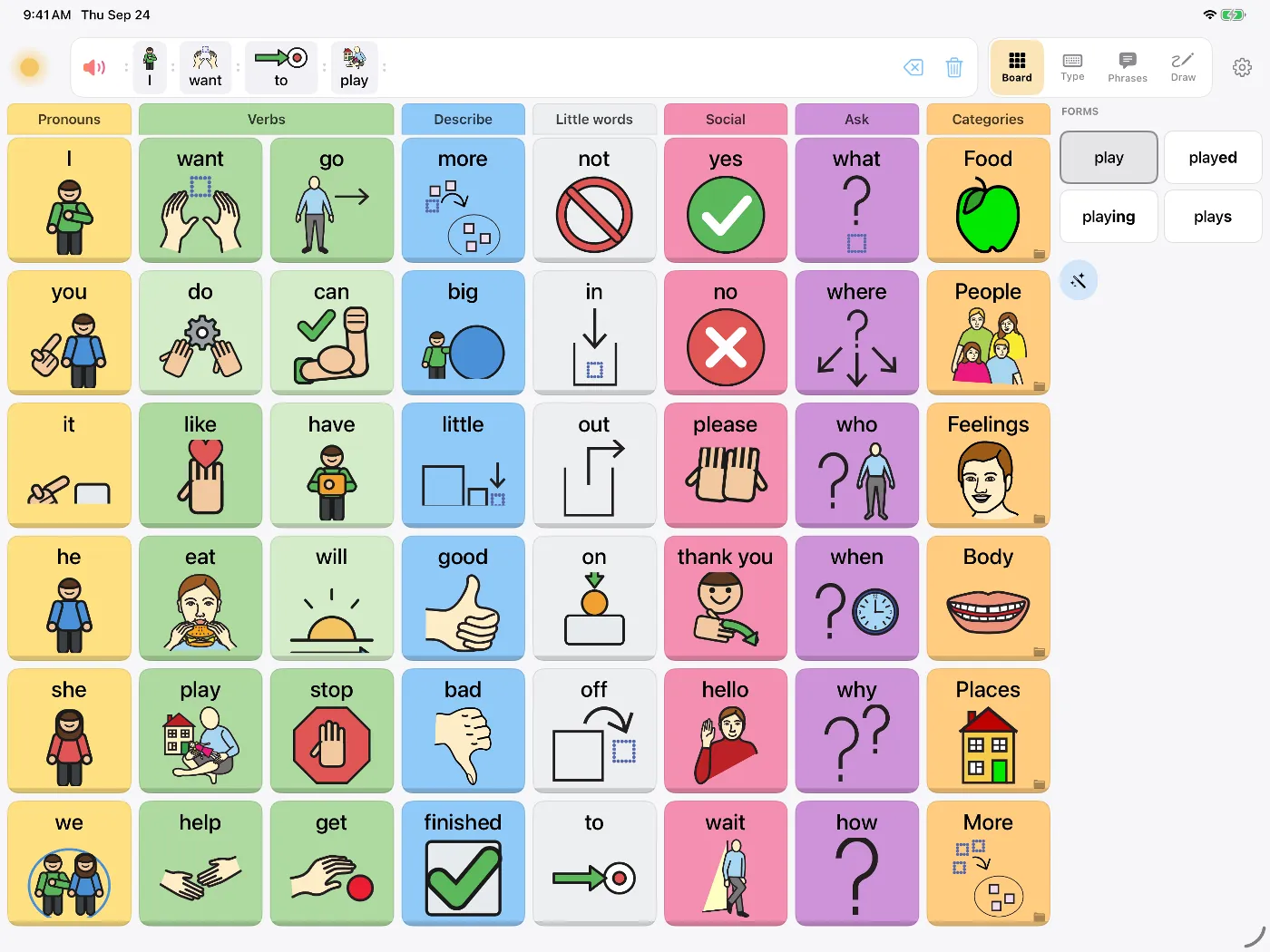
Dawn speaks typed messages or chosen words during rehabilitation; it doesn't speed up recovery. A traumatic brain injury can affect communication in several ways. Some people can't find words, some have slurred speech, some lose track of a conversation or of what they were saying, and many tire very quickly.
Needs often change during recovery, so a setup that suited someone last month may be too simple or too complicated now.
Choosing a setup
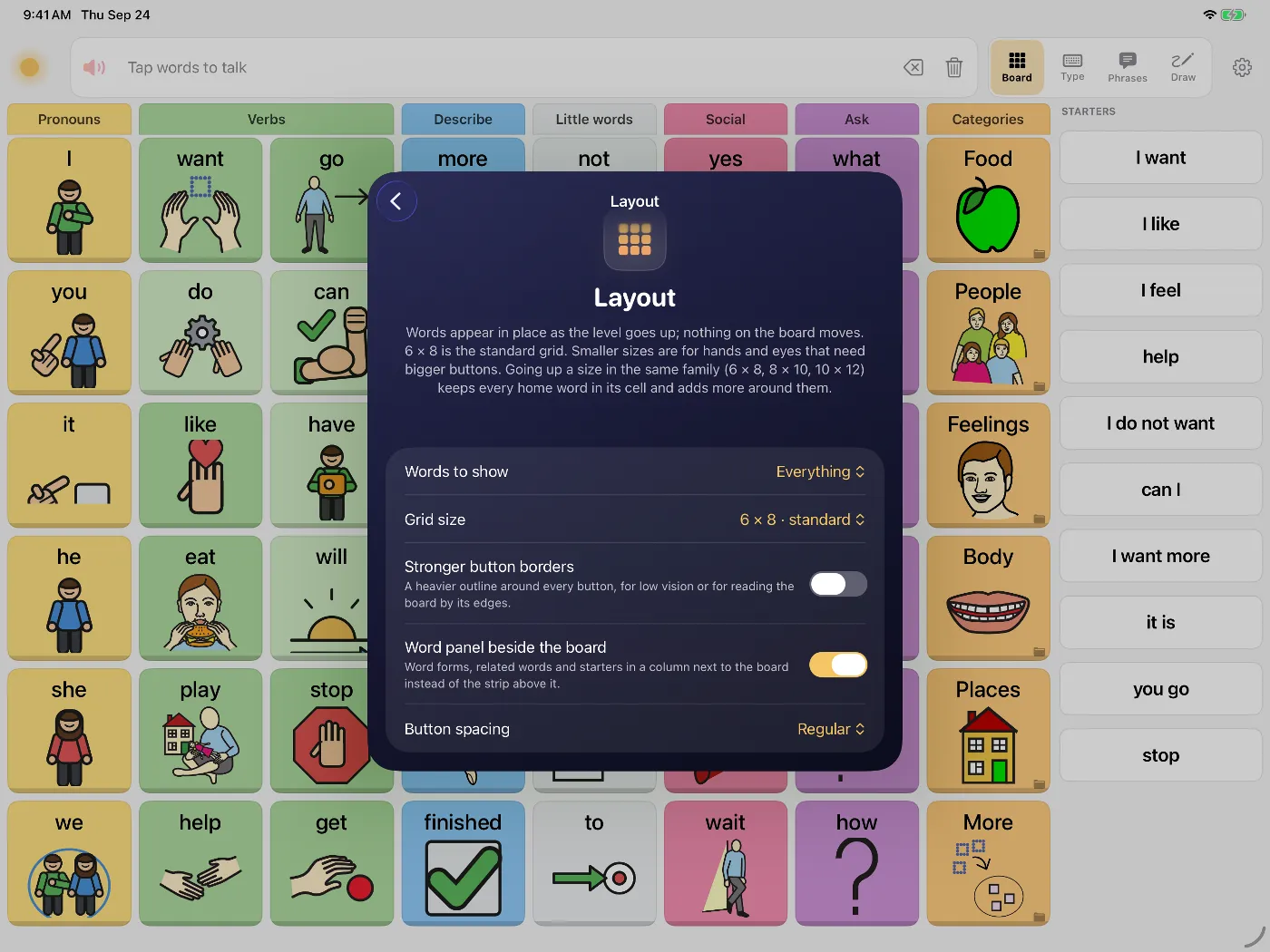
A few large buttons. Yes, no, pain, tired, toilet and family names. Dawn's smaller grids have bigger buttons, and "Words to show" can start with only a few words. Showing more later puts new words in empty cells and leaves the rest where they are.
Saved phrases for things the person says every day.
Typing with word suggestions, for someone who can read and spell.
Review the setup with the rehab team when the person's needs change.
Tiredness
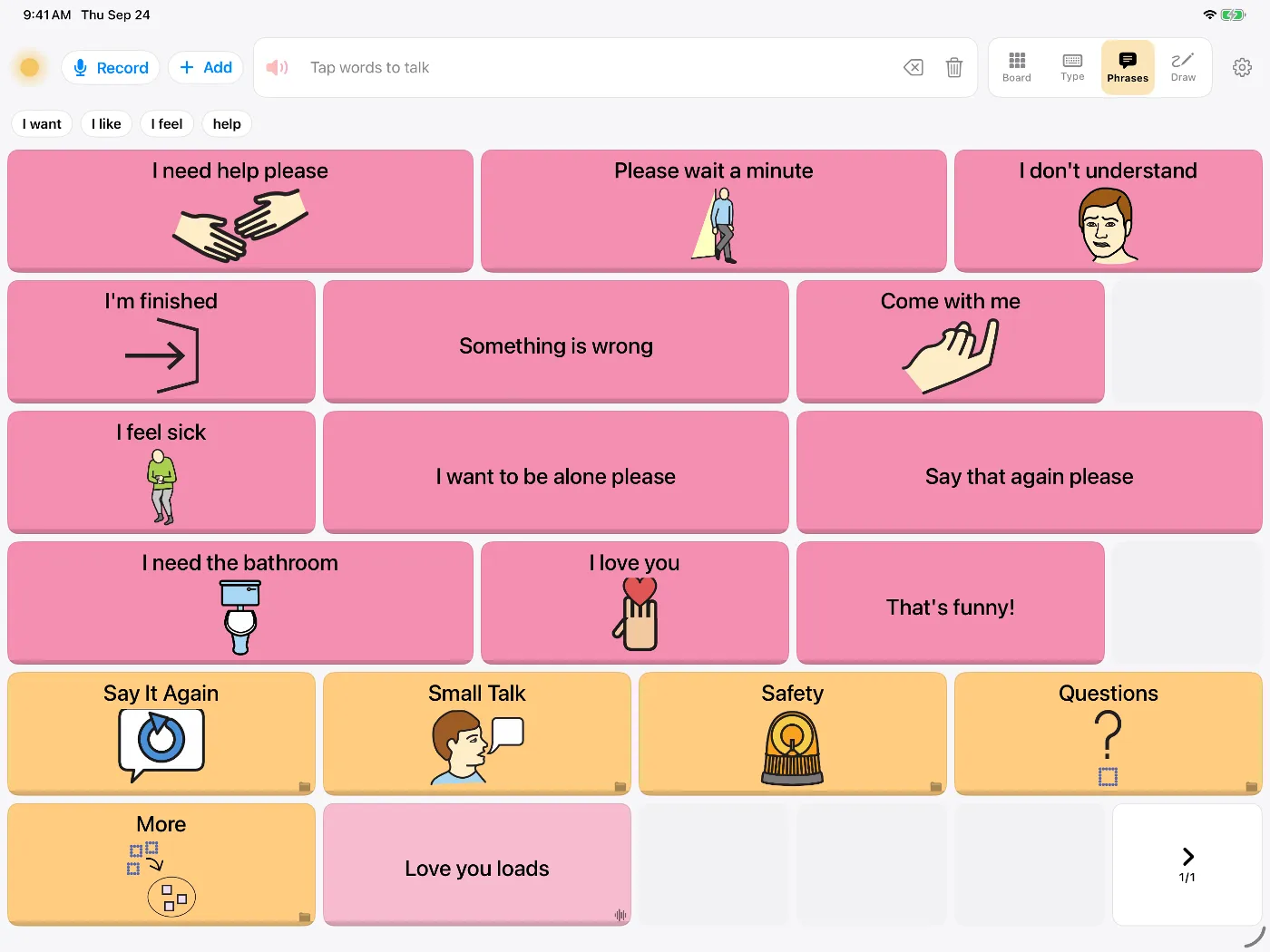
Talking takes a lot of energy after a brain injury. Put the most-needed messages in the Phrases tab so they take one tap. Turn on Lock Settings so the layout doesn't change by accident. Keep practice short.
The rehab team
The speech and language therapist and occupational therapist on a rehab team can work out what the person needs now and how to set up the app. Bring the iPad or iPhone to sessions so they can adjust it.