An estimated 80 to 95 percent of people with ALS eventually need another way to communicate besides speech.1 In one four-year study, 96% of participants accepted AAC when it was offered.2 UK guidance says communication aids should be provided "without delay".3
Before speech changes
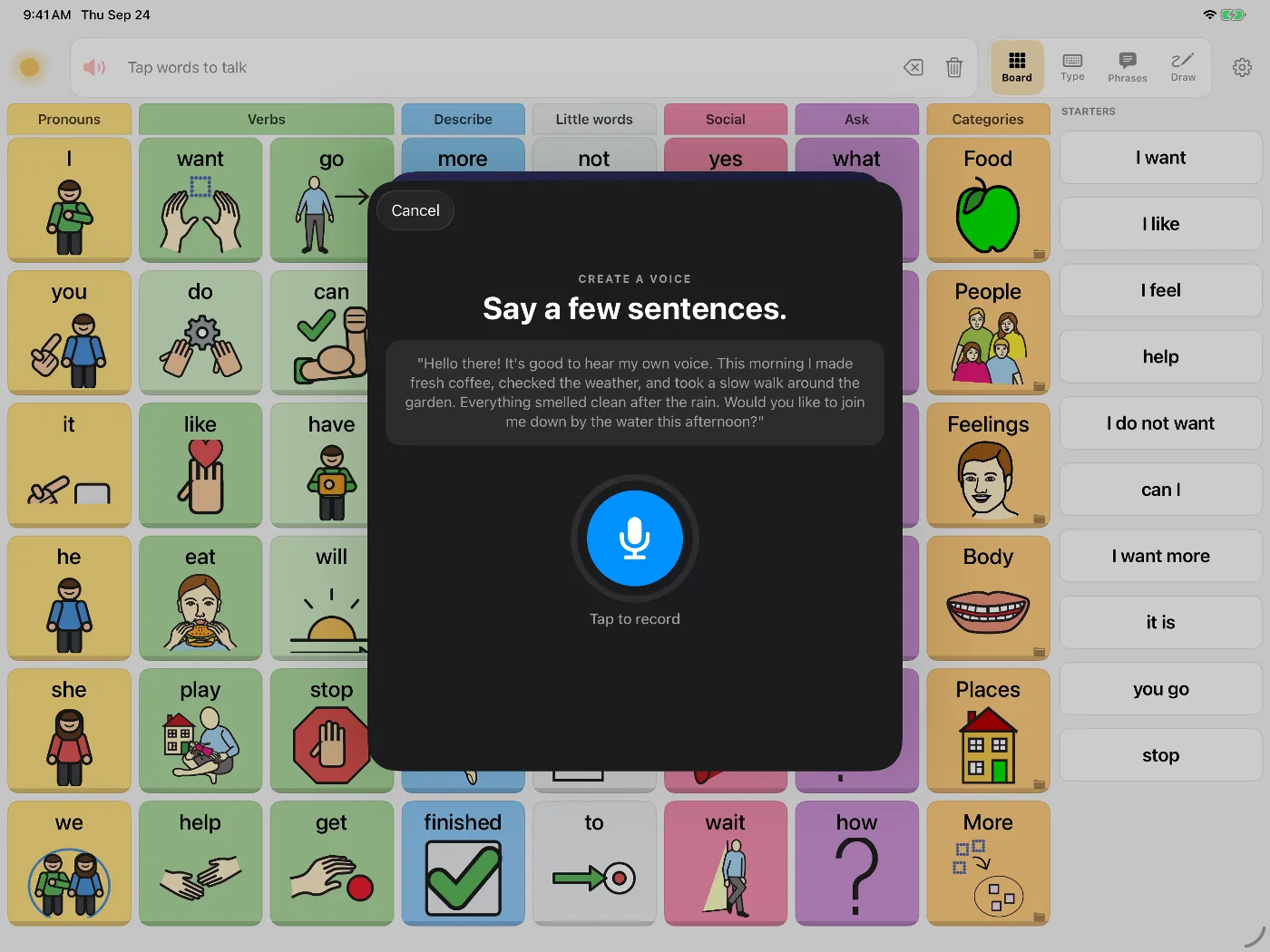
Record a voice. Read a short passage for about eight seconds and Dawn builds a voice from it on your iPhone or iPad in about half a minute. If you don't like the result, record again. How voice banking works in Dawn.
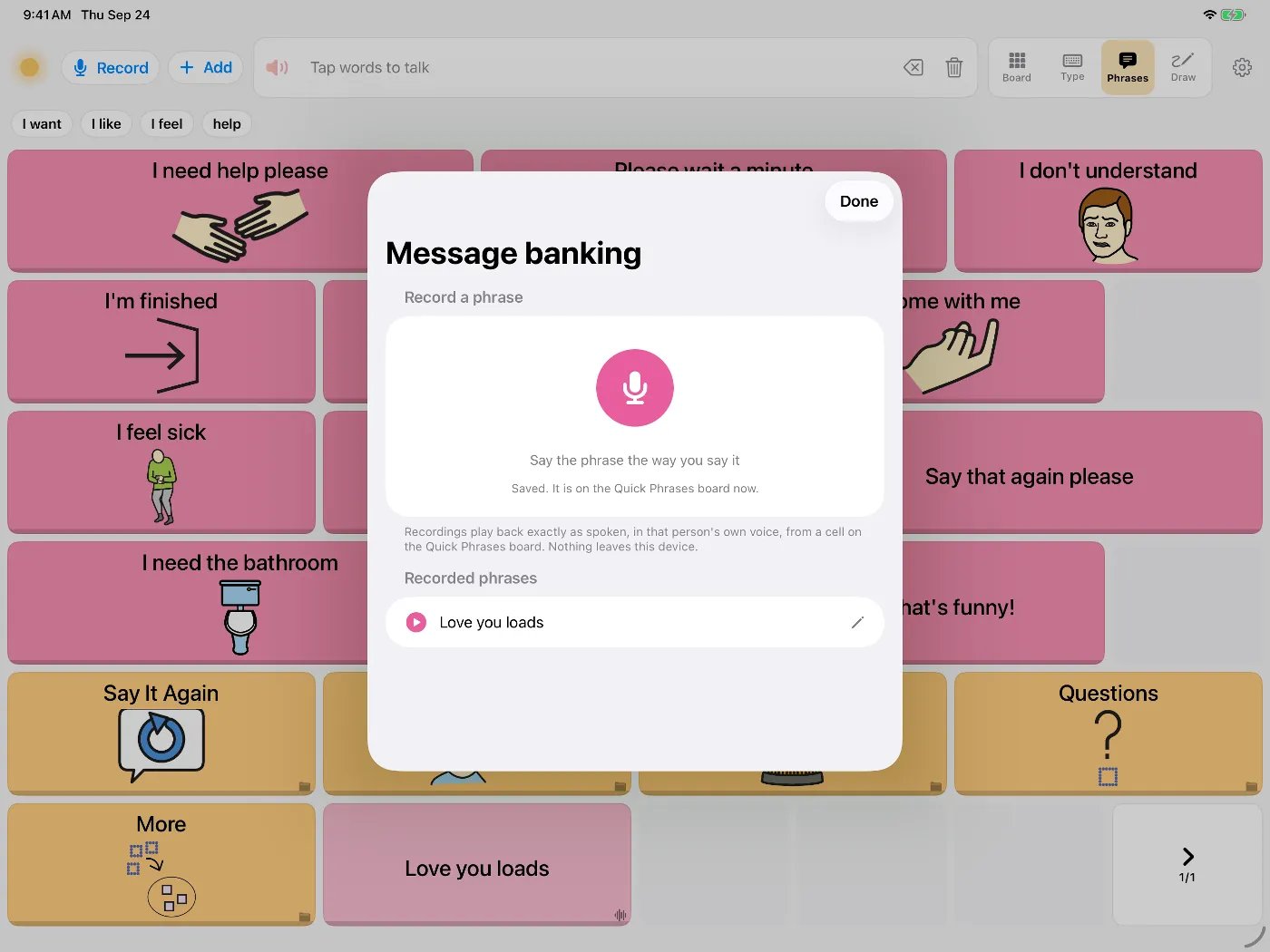
Record phrases. Nicknames, greetings, jokes, "I love you", the way you call the dog. These play back exactly as you recorded them. Message banking was developed at Boston Children's Hospital in work with people with ALS, with the person and their family deciding what to record.4 We have a list of ideas for what to record.
Try the app now and then, so you know your way around it before you rely on it.
In one interview study, people with MND who banked their voice said they did it mainly to keep something of who they are. Some people in the same study decided not to.5
Typing and phrases
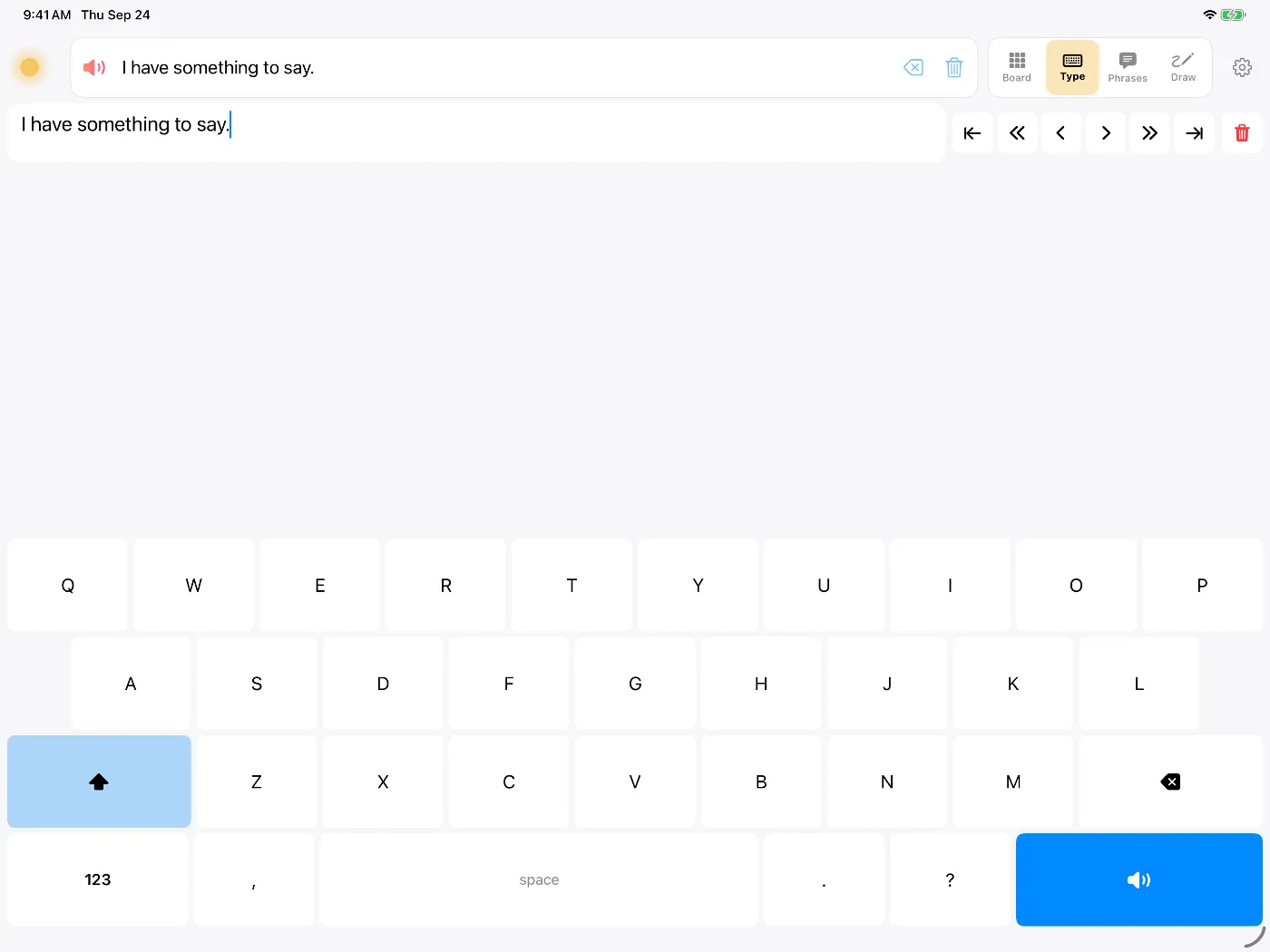
Typing lets you say things that aren't on the board or in your saved phrases. Dawn suggests words as you type and speaks in the voice you chose, including one made from your recording. Things you say every day, like care routines or "give me a minute to type", can go in the Phrases tab, where they take one tap.
Caregivers in one study said people used their devices for personal conversations as well as everyday requests.6
When your hands get weaker
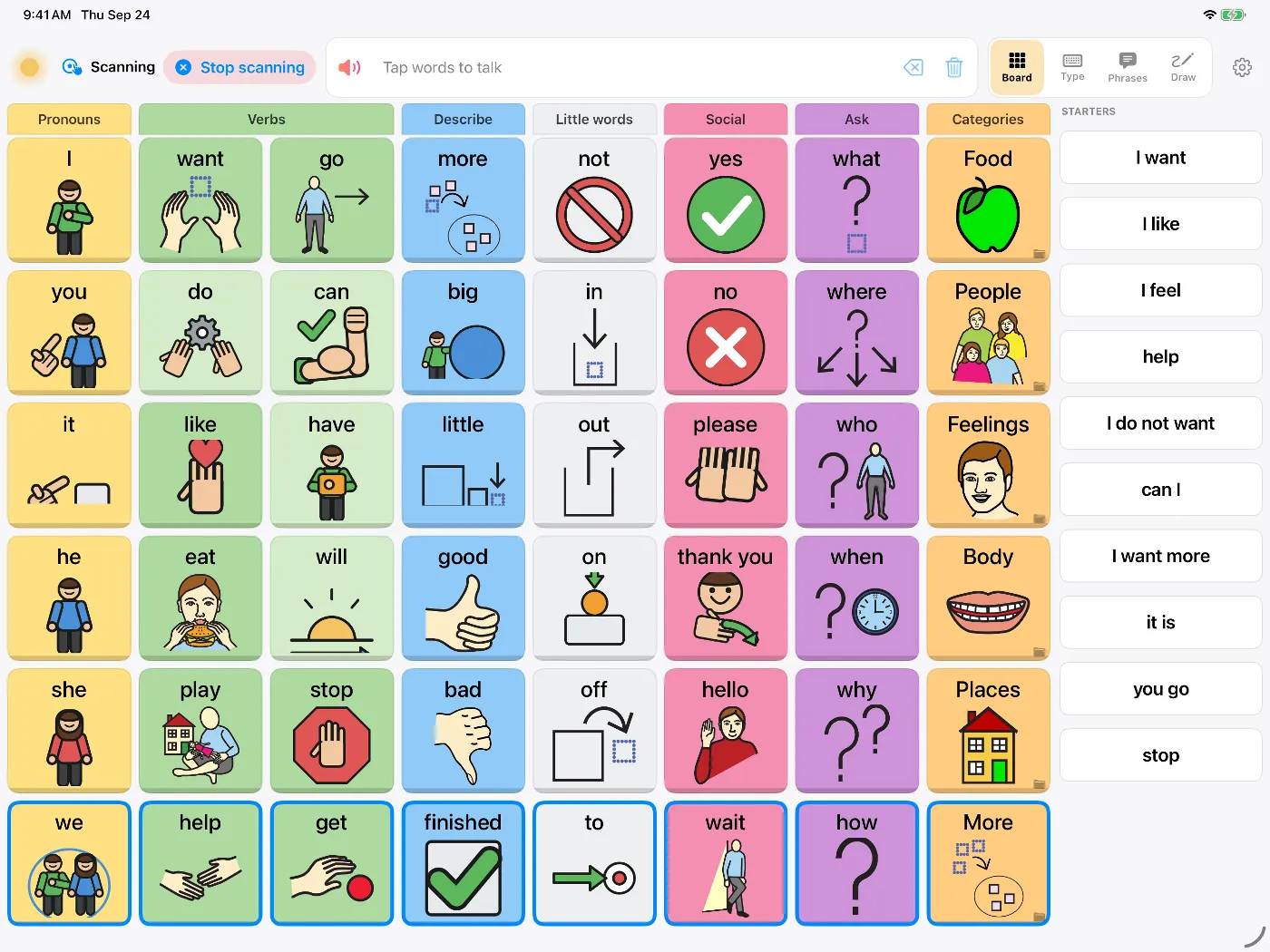
You can make buttons bigger, require a short hold before a tap counts, and have Dawn ignore accidental double taps. Dawn's switch scanning moves through the board, keyboard and phrases by row, column or block, with one switch or two, and can speak or click each item as it's highlighted. iOS Switch Control, head tracking and Eye Tracking work with every button too.
Many people with ALS later use a dedicated eye-gaze device, and Dawn doesn't include eye-tracking hardware. An AAC specialist or occupational therapist can help you plan for that, and your ALS clinic can refer you for a speech-language pathologist's assessment.
For partners and families
In a recent US survey, fewer than half of people with ALS said their family had received any advice or training about communication.7 Give the person time to type, don't finish their sentences unless they ask you to, and keep the device charged and within reach. We wrote a guide on talking with someone who uses AAC for family and friends.