Selective mutism is an anxiety disorder. A child (or adult) speaks normally in some places, often at home, but consistently can't speak in others, such as school, even when they want to. It usually starts in early childhood. Treatment generally works on lowering anxiety and building up speaking a step at a time.
In the meantime, a child who can't speak in class can't tell the teacher they feel sick. Some families and schools add AAC for situations like that.
Agree on a plan first
Talk with your child's clinician and the school before the app goes into the classroom. Things to settle:
- Where the app is the main way to respond, and where speaking is encouraged.
- Who sets up the phrases, and whether your child helps choose them.
- How staff will respond, so the app doesn't replace every speaking step in the plan.
- When you'll review it as your child makes progress.
What families use in Dawn
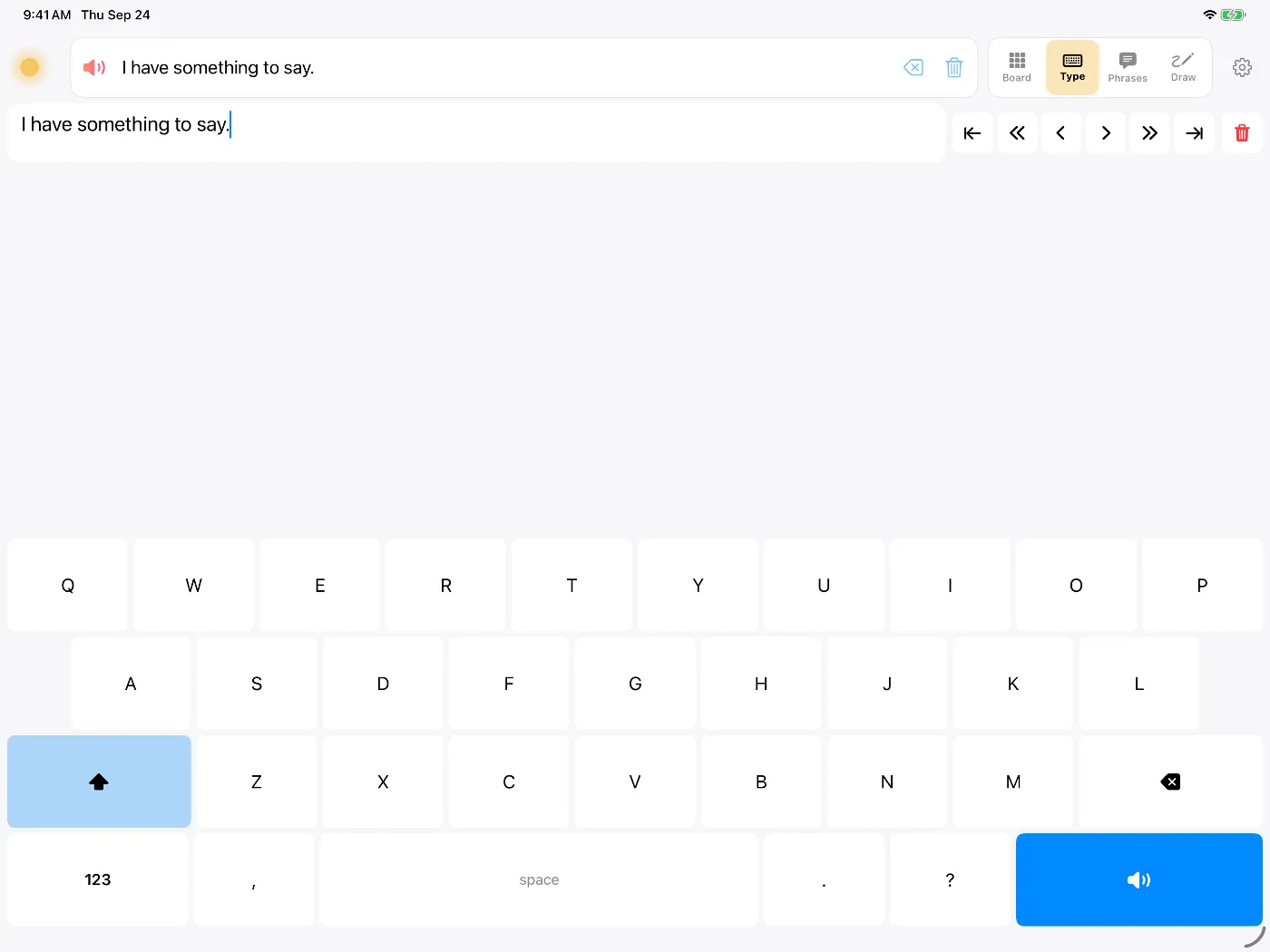
Typing an answer and playing it aloud, or showing it on the screen, works for answering questions in class. For children who aren't ready for any voice to be heard, the message can be shown full screen without being spoken.
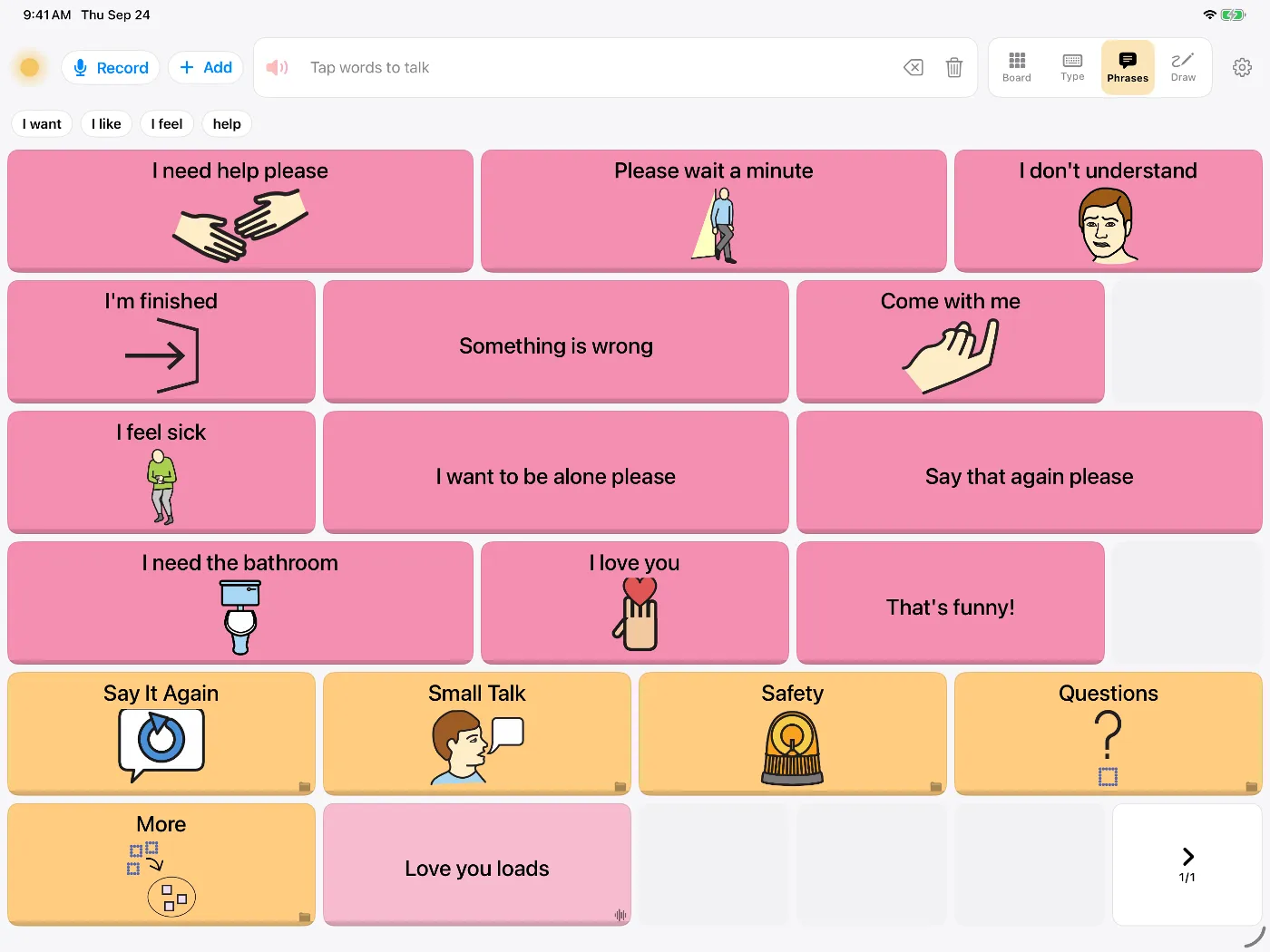
Saved phrases cover needs: "I need the bathroom", "I feel sick", "Can I get my teacher?" On an iPhone, Dawn looks like any other app on the phone.
If your child doesn't have support yet, ask your doctor or school about a referral.