Childhood apraxia of speech (CAS, or verbal dyspraxia in the UK) is a speech disorder in which the brain has trouble planning the movements needed for speech. It isn't a problem with understanding, and it isn't caused by weak muscles. A child with apraxia may understand everything you say and still be very hard to understand, or say very little.
What ASHA and the research say
- AAC is one of the optionsASHA's position statement on apraxia says treatment may include augmentative and alternative communication and assistive technology.1
- It's used alongside speechASHA says AAC can give children a way to communicate that "supports and enhances verbal speech production", and may help them develop language they can't yet practise out loud.2
- Starting earlyA 2026 review found studies suggesting that starting AAC early may help children communicate.3
- There isn't much researchThat review found 11 studies, and ASHA calls the early case studies a low level of support.34
Using Dawn with a child who has apraxia
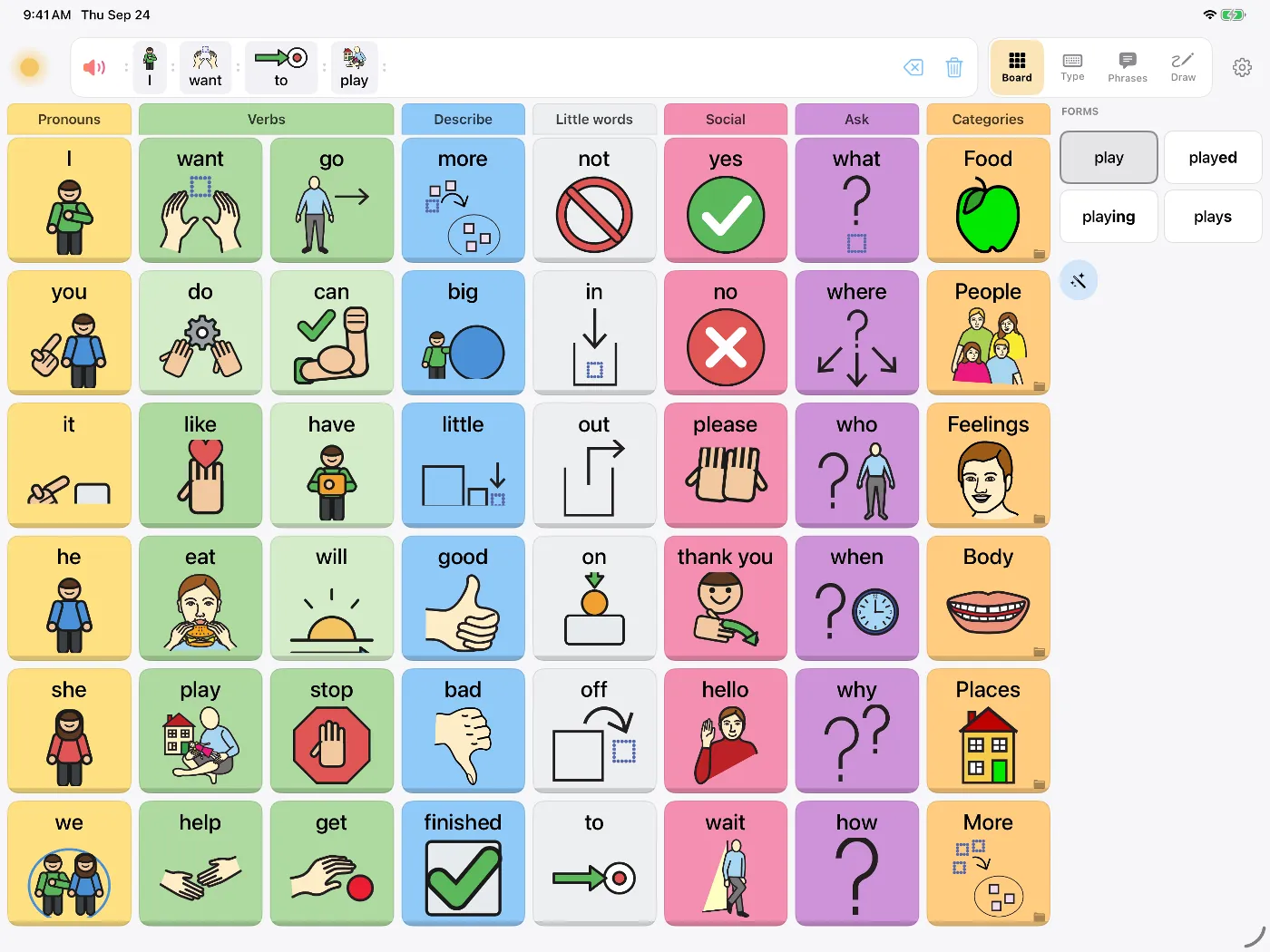
A child with apraxia may know many more words than they can say, and can outgrow a small board quickly. In Dawn you can start with First words or Combining under "Words to show" and move to Everything later. New words appear in empty cells, so the words your child already uses stay where they are.
Tapping a word shows its other forms beside the board, such as go, went, going, so a child who is building sentences can pick the right one.
When you can't understand a word your child is saying, they can find it on the board or type it. A saved phrase like "Let me show you" helps.
Dawn has children's voices, so the app can sound like a child. Older children who can spell can type with word suggestions.
Speech and AAC at home
Respond to your child's message whether they say it or tap it. Some speech-language pathologists use the app in therapy: the child taps a word, hears it, then tries saying it. Your child's therapist can tell you whether that suits your child.
Dawn gives your child a way to communicate alongside speech therapy; it doesn't treat apraxia. If your child hasn't been assessed, ask your doctor for a referral to a speech-language pathologist (speech and language therapist in the UK) who has worked with apraxia.